Entering your first running race is exciting, but it can also bring a long list of questions. Where do you collect your number? How early should you arrive? Where should you stand at the start? What happens if you need to walk?
The reassuring answer is that you do not need to look or run like an experienced racer. Prepare the practical details in advance, start at a pace you can manage and follow the organiser’s instructions. The rest is simply putting one foot in front of the other.
Whether you have entered a friendly 5K, your first 10K or a Cornish multi-terrain event, this guide will help you reach the start line feeling calm and ready.
Read the race instructions before the day
Your entry confirmation and final event email should answer most of your important questions. Read them when they arrive, then read them again a day or two before the race.
Check:
- the exact venue and start time;
- parking, public transport and road-closure information;
- whether the start and finish are in the same place;
- where and when to collect your race number or timing chip;
- the route, surface and elevation;
- whether there are water stations, baggage facilities or toilets;
- any cut-off times or compulsory kit;
- the event’s rules on headphones; and
- how results will be recorded and published.
England Athletics’ advice for a first running event also recommends checking the route profile and planning transport ahead of time. Knowing where the hills, narrow sections or rougher surfaces appear can make them feel much less intimidating.
Do not rely on the arrangements from another race, even if it covered the same distance. Every organiser, venue and course is different.
Keep the final week familiar
The last few days are not the time to squeeze in missed training or test something completely new. One extra hard session is unlikely to transform your result, but it could leave you tired on the start line.
Stick to the routine that has worked during training. If you plan to wear particular shoes, socks, shorts or a vest, use items you already know are comfortable. The same applies to breakfast, drinks and anything you intend to carry during the race.
If your first event is a 10K, our beginner’s guide to training for a first 10K explains how to approach the distance gradually rather than relying on a last-minute push.
Prepare your kit the night before
Laying everything out in advance prevents a hurried search on race morning. A simple checklist might include:
- running top, shorts or leggings;
- comfortable socks and tested running shoes;
- race number, timing chip and safety pins where required;
- event confirmation or identification if requested;
- a warm or waterproof layer for before and after the race;
- a change of clothes and dry socks;
- water and your familiar pre-race food;
- sun protection or a cap when appropriate;
- any compulsory kit listed by the organiser; and
- a charged phone, payment card or cash for travel and parking.
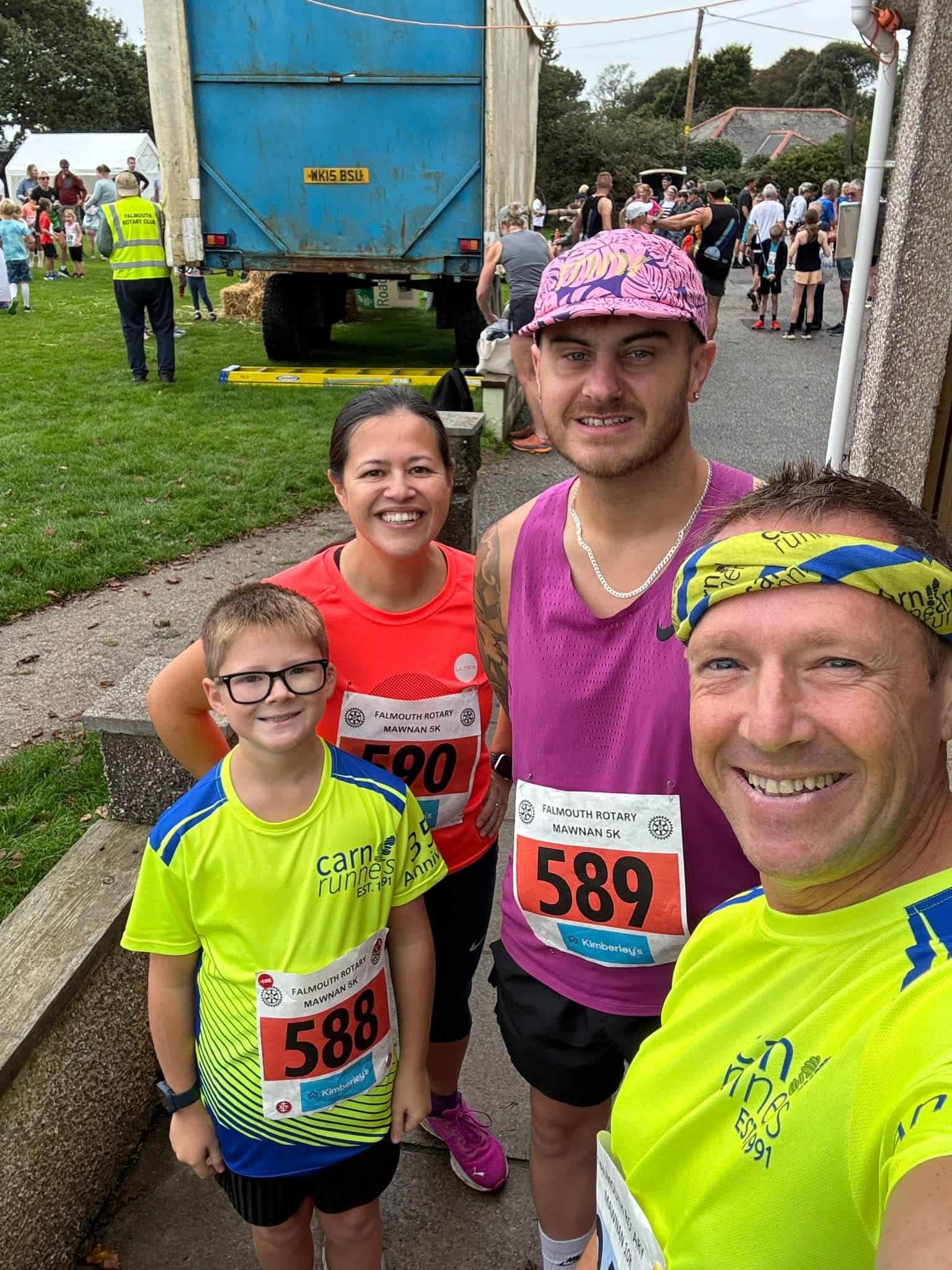
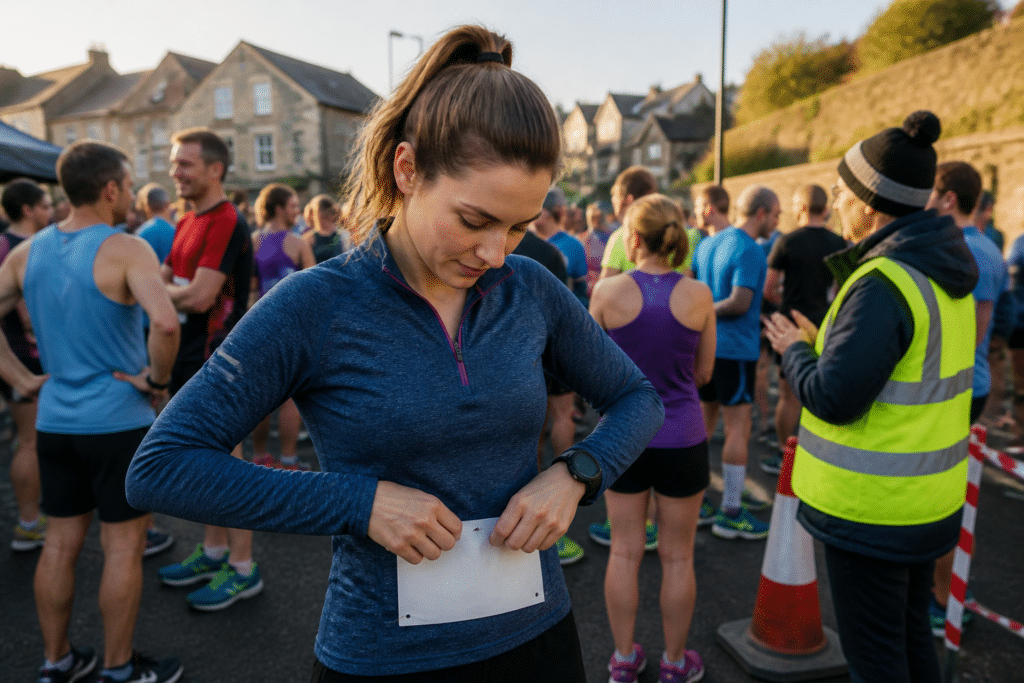
If your number has arrived in advance, attach it to the front of the top you will wear. Avoid folding it or covering important timing information. If it must be collected on the day, confirm the collection point and allow extra time.
Give yourself more time than you think you need
Aim to arrive early enough to park, find registration, use the toilets, leave a bag and understand the start area without rushing. Popular races can have queues, and unfamiliar venues often take longer to navigate than expected.
Once you arrive:
- Collect your number or chip if needed.
- Locate the toilets, baggage area, start and finish.
- Listen for announcements and attend the race briefing.
- Check whether there have been any route or timing changes.
- Begin a gentle warm-up with enough time to join the start safely.
The NHS running guidance suggests five to 10 minutes of brisk walking or gentle jogging as a warm-up. Keep it easy and familiar; your warm-up should prepare you to run, not become a race of its own.
Choose the right place at the start
Large events may have marked starting waves or estimated finish-time areas. Join the section that best reflects your expected pace rather than moving to the front because there appears to be more space.
If there are no signs, faster runners will generally gather near the front and steadier runners or run-walk participants farther back. Starting in an appropriate position makes the opening section safer and reduces the temptation to follow runners moving much faster than you intended.
Feeling nervous is normal. Focus on the things you can control: relaxed shoulders, steady breathing and a sensible first few minutes.
Start more steadily than you want to
The atmosphere, countdown and runners around you can make the opening kilometre feel unusually easy. This is where many first-time racers set off too quickly.
Begin at a controlled effort and give the field time to spread out. You can increase your pace later if you still feel strong. It is much more enjoyable to finish with energy than to spend most of the race recovering from an overenthusiastic start.
Walking is also allowed unless the event’s published rules say otherwise. A planned or unplanned walking break does not cancel the achievement. Move to the side when it is safe, check behind you before changing direction and resume running when you are ready.
Follow good race etiquette
A few simple habits help everyone enjoy the event:
- follow instructions from marshals and event officials;
- keep left or right when directed by the organiser;
- avoid stopping suddenly in the middle of the course;
- look behind you before moving across the route;
- give other runners space at narrow points and water stations;
- place cups or litter only where the organiser requests;
- thank volunteers when you can; and
- tell a marshal if you withdraw rather than simply leaving the course.
If you feel unwell or something does not feel right, slow down or stop and speak to a marshal or member of the event team. Finishing is never more important than responding sensibly to a problem.
What to do after crossing the finish line
Keep moving through the finish area so runners behind you have room to cross. Follow instructions for chip removal, medals, water and baggage collection, and arrange a clear meeting point if friends or family are waiting.
A few minutes of easy walking can help you cool down gradually. Change out of wet clothing when possible, have a drink and eat something familiar when you feel ready.
Your time is only one part of the day. Completing a first event, managing your pace, following a run-walk plan or simply overcoming start-line nerves are all worthwhile successes. Make a quick note of what worked and what you would change next time while the experience is still fresh.
Finding your next Cornish running challenge
Once you have completed one race, you may want to explore a different distance or surface. The Cornwall Grand Prix introduces runners to a varied programme of road events, while the Cornwall Multi-Terrain Race Series is ideal for those tempted by trails, hills and muddier routes. Always check the individual organiser’s current entry requirements before registering.
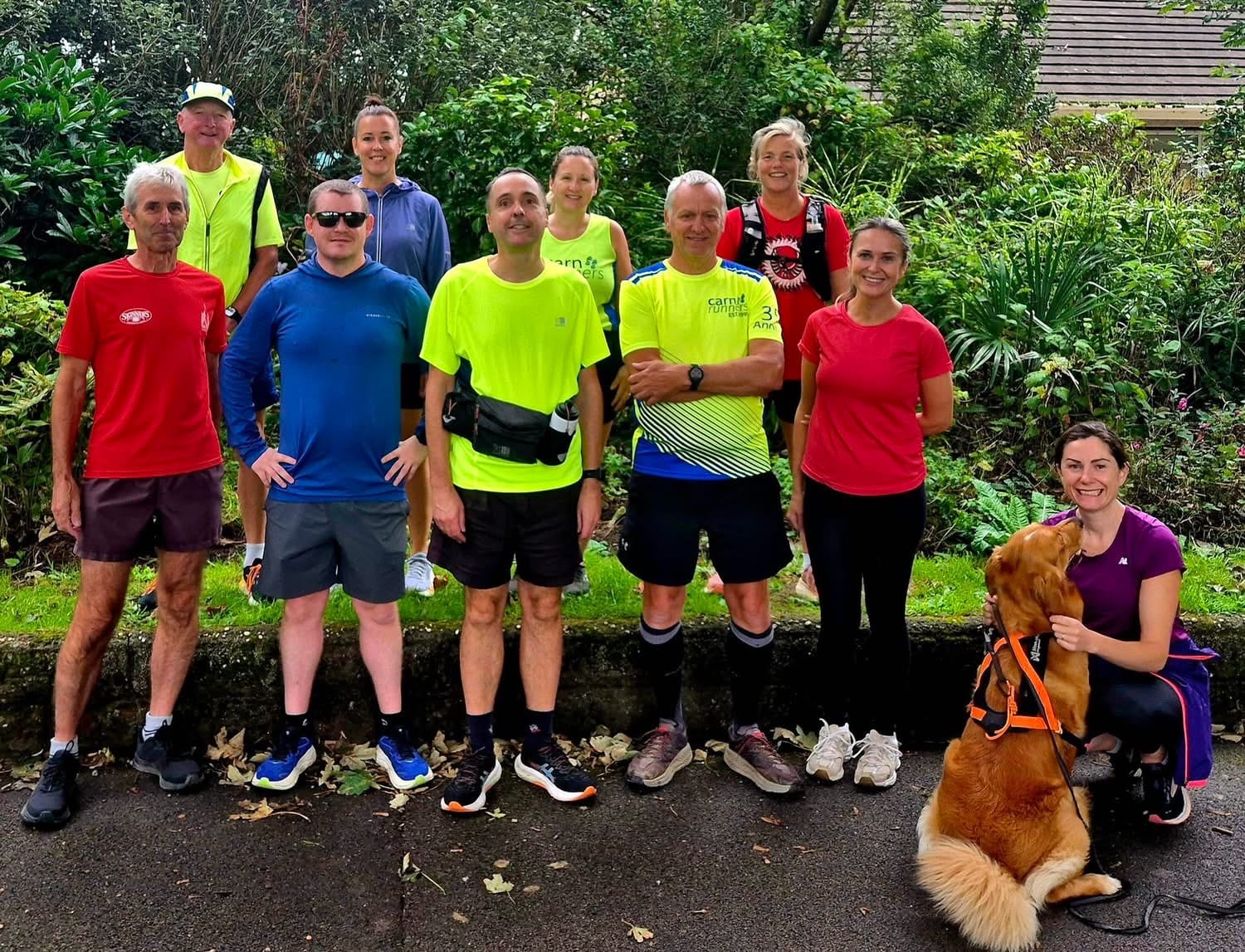
You can also browse our Club News to see Carn Runners taking part in races around Cornwall and farther afield. The reports are a useful reminder that race days involve every kind of runner, goal and experience—not only the people chasing the first finishing positions.
Build your confidence with Carn Runners
If you would like company while preparing for your first event, come along to a Carn Runners club night. We meet at Camborne Cricket Club at 6.30pm on Wednesdays, with sessions for different abilities and four free trial nights available to prospective members aged 16 and over.
Visit the Membership Application page to learn how to join, or check the Run Schedule for upcoming sessions and routes. If you are unsure which session may suit you, use our Contact page or email hello@carnrunners.co.uk.