PBs, splits, reps, tempo runs, negative splits and DNFs: runners can fit a surprising amount of jargon into an ordinary conversation.
The good news is that you do not need to memorise a new language before joining a club or entering a race. Most running terms describe something straightforward, and it is always fine to ask a run leader or another member what a session involves.
This beginner-friendly glossary explains the words you are most likely to hear at a Carn Runners club night, during training or around the finish line.
Basic running terms
Pace
Pace describes how long it takes to cover a set distance. In the UK, runners commonly express it as minutes per mile or minutes per kilometre.
For example, a pace of ten minutes per mile means that each mile takes approximately ten minutes. Pace is not the same as effort: hills, wind, mud and tired legs can make the same watch pace feel very different from one day to another.
PB and PR
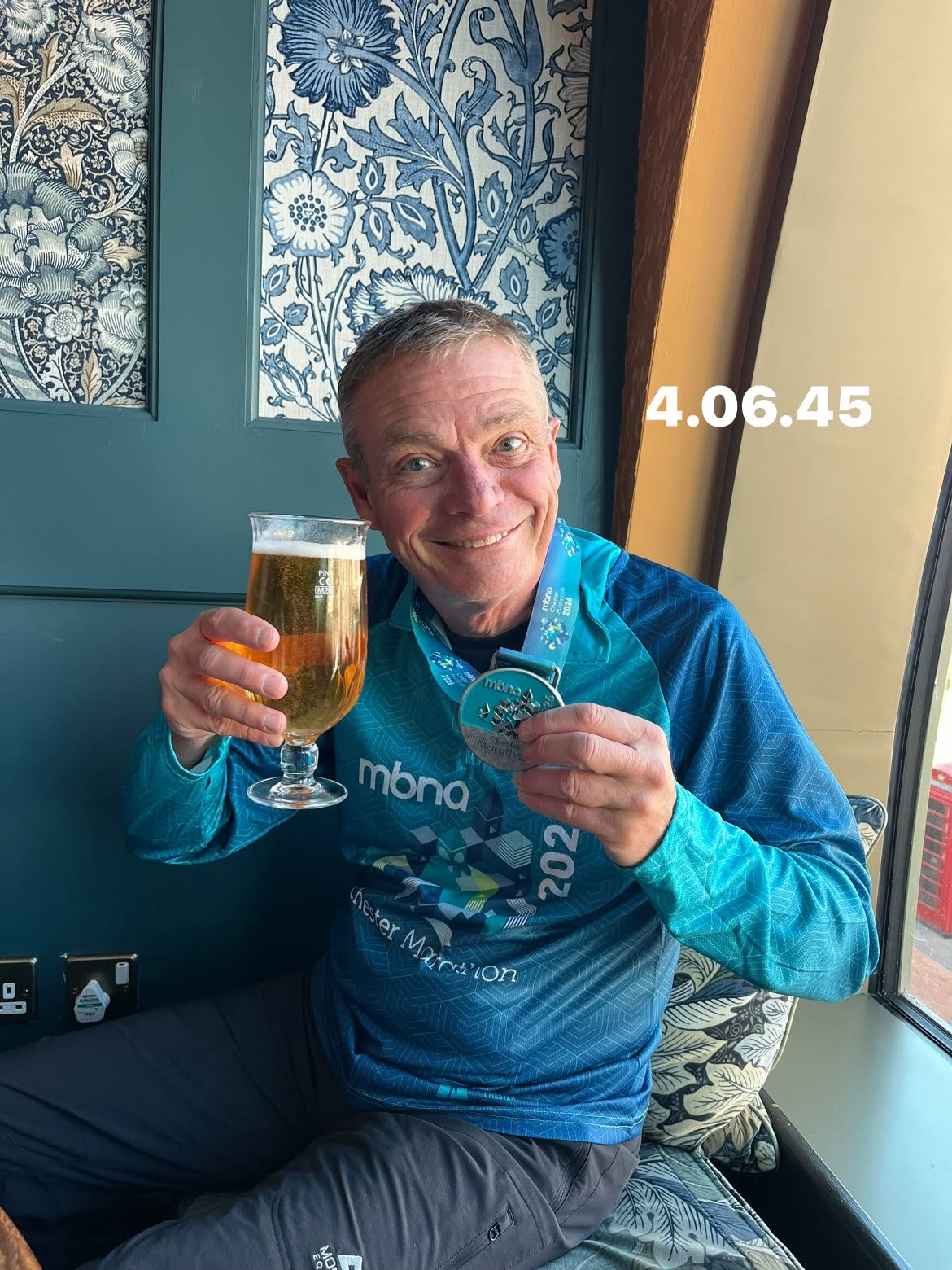
A PB is a personal best: your fastest recorded time over a particular distance or course. You might have a 5K PB, a marathon PB or a PB for a particular local race.
PR means personal record and is used in much the same way, particularly in North America. British runners are more likely to say PB.
Split
A split is the time taken to complete part of a run or race. A GPS watch might show a separate split for every mile or kilometre.
Splits can help you see whether your pace remained consistent, increased or faded. They are useful information, but they do not tell the whole story when a route includes major climbs or changing terrain.
Negative split
A negative split means completing the second part of a run or race faster than the first. Starting under control and gradually increasing the pace can produce a negative split.
The opposite is a positive split, where the second half is slower. That is not automatically a bad result: weather, hills and the demands of the distance can all affect the later stages.
Words used to describe training effort
Easy run
An easy run should feel relaxed and conversational. You are still exercising, but you should normally be able to talk in complete sentences rather than fighting to maintain the pace.
Easy does not mean pointless, and it is not a particular speed. One runner’s easy pace may be another runner’s hard effort.
Steady run
A steady run is generally a little stronger than a fully relaxed easy run, while remaining controlled. You may breathe more noticeably, but you should not feel as though you are racing the people around you.
These descriptions are based on effort rather than a universal watch pace. England Athletics provides a useful explanation of easy, steady, threshold and interval running. Carn Runners’ guide to choosing the right effort on a club run also explains how conversation can help you judge your pace.
Tempo and threshold
Tempo and threshold are sometimes used loosely to describe sustained, comfortably hard running. This is a stronger and more focused effort than an easy or steady run, but it should still be controlled rather than an all-out sprint.
The precise meaning can vary between training plans and coaches, so listen to the session briefing instead of assuming that every tempo workout will be identical.
RPE and the talk test
RPE stands for rating of perceived exertion. It is a way of judging intensity by how hard the running feels, often using a scale from zero to ten.
The talk test is an even simpler guide. Relaxed conversation suggests an easier effort; short sentences indicate that the work is becoming harder; and managing only a few words suggests a high intensity.
Common club training sessions
Intervals and reps
Interval training divides harder running into repeated sections with recovery between them. The faster sections are often called repetitions, or reps.
A session described as “six three-minute reps” usually means running harder for three minutes, recovering and repeating that pattern six times. The leader will explain the intended effort and type of recovery before the session begins.
Recovery
During a structured workout, recovery is the easier period between harder efforts. It might involve walking, gentle jogging or standing for a set time.
Recovery is part of the session, not a sign that you have failed. It allows you to regain enough control to complete the next repetition properly.
Fartlek
Fartlek is a Swedish term meaning speed play. It involves changing pace during a continuous run rather than stopping between every faster section.
The changes may be structured by time, distance or landmarks. For example, a group might run more strongly to the next lamppost before returning to a relaxed pace.
Hill reps
Hill repetitions involve running uphill several times, with an easier return or rest between efforts. The aim is not necessarily to sprint every climb. As with intervals, a controlled opening effort usually makes it easier to complete the whole session consistently.
Warm-up and cool-down
A warm-up prepares the group for the main session and may include easy running, mobility work or simple drills. A cool-down is the easier activity at the end.
Arriving on time matters because the briefing and warm-up may contain information about the route, session format and safety arrangements.
Group-running language
Regroup
A regroup is a planned point where runners come back together, often at a junction or after a hill. It keeps the group connected and gives the leader an opportunity to check that everyone is comfortable.
Looping back
Looping back means that runners near the front turn around and return towards the group before continuing. When requested by the leader, this can give faster runners some extra distance without leaving others isolated.
Run-walk
Run-walk alternates periods of running and walking. It can be used by beginners, experienced runners covering longer distances and anyone who finds that planned walking breaks make a session more manageable.
It is a valid way to complete a run or race, not something that has to be hidden. Carn Runners welcomes runners who are currently using run-walk intervals.
Race-day terms and abbreviations
- 5K: five kilometres, or approximately 3.1 miles.
- 10K: ten kilometres, or approximately 6.2 miles.
- Half marathon: 13.1 miles, or just over 21 kilometres.
- Marathon: 26.2 miles, or 42.195 kilometres.
- Ultra: an event longer than the standard marathon distance.
- DNS: did not start.
- DNF: did not finish.
- Gun time: the time measured from the official start of the race.
- Chip time: the time measured from when an individual crosses the start timing point to when they cross the finish timing point, where chip timing is used.
If your first event is approaching, read Your First Running Race: A Practical Race-Day Guide for help with numbers, start lines, kit and finish areas.
Age category and age grade
An age category groups race results by age, with the organiser deciding which categories and prizes are available.
An age grade is different. It uses a percentage to provide a rough way of comparing performances across ages and categories. The calculation does not remove differences caused by weather or course difficulty, so it should be treated as an interesting comparison rather than a perfect ranking. The parkrun age-grading guide explains how this works in parkrun results.
Local race-series terms
GP
Within Cornish club running, GP commonly refers to the Cornwall Grand Prix, a series of road races held around the county. Runners can enter individual fixtures without having to treat the full series as one enormous commitment.
MTRS
MTRS stands for the Cornwall Multi-Terrain Race Series. Its fixtures move away from standard road racing and can include trails, fields, woodland, mud and hills.
Marshal
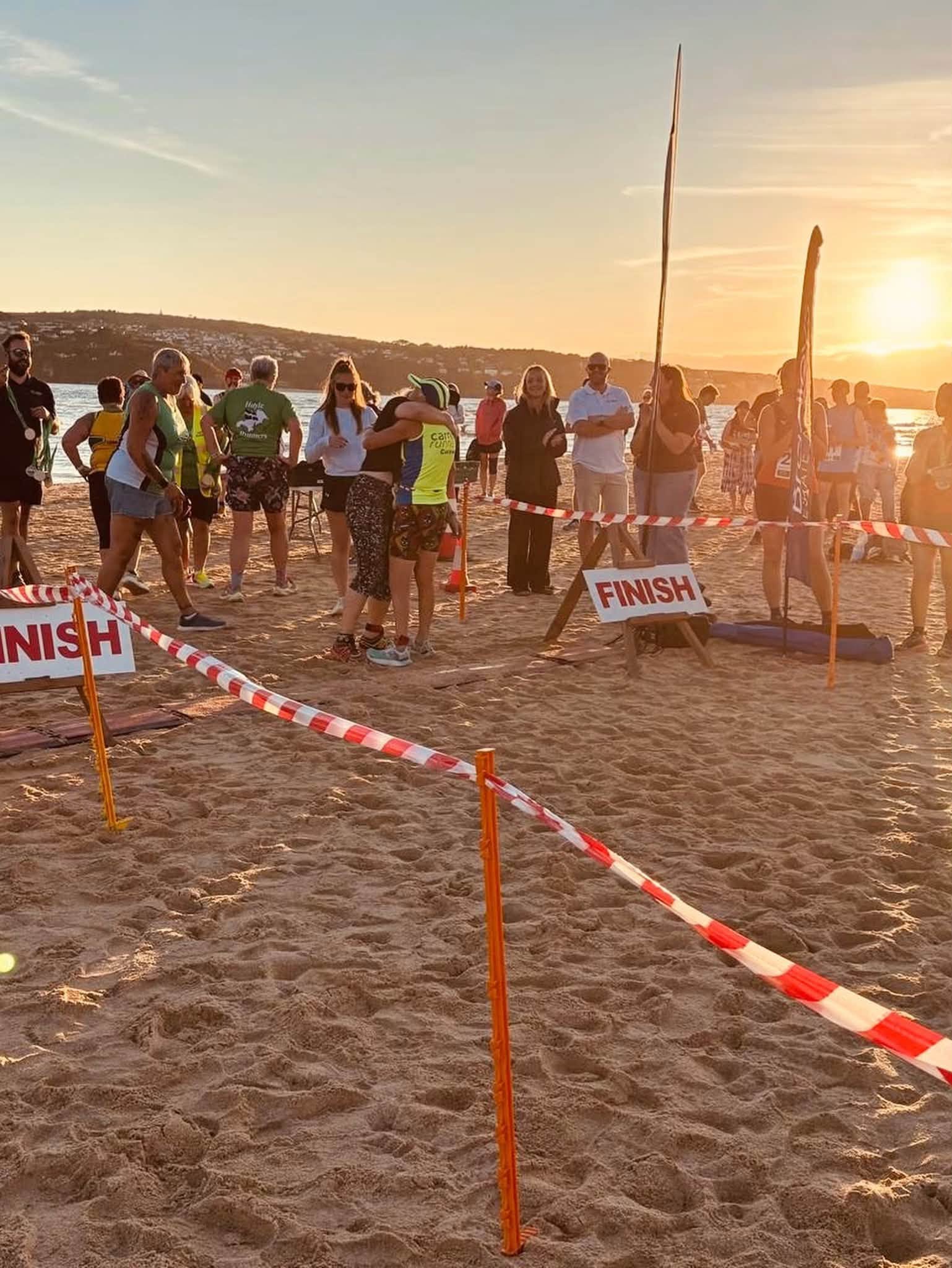
A marshal is a volunteer who helps an event operate safely and smoothly. Depending on the role, marshals may direct runners, monitor part of the course, support road crossings or help around the start and finish.
Always listen to marshal instructions and thank them when you can. Local races depend on volunteers giving their time.
The easiest way to learn is to join in
You do not need to understand every term before attending a club session. Check the Carn Runners Run Schedule to see what is coming up, then ask the leader if any part of the description is unfamiliar.
Carn Runners welcomes runners aged 16 and over, including beginners and people using run-walk intervals. Wednesday club nights normally meet at Camborne Cricket Club at 6:30pm, although occasional away runs mean it is sensible to check the schedule before travelling.
Newcomers can attend up to four free club nights before deciding whether to join. Visit the Membership Application page for details, browse the latest Club News, or use the Contact page to let us know you are coming. You can also email hello@carnrunners.co.uk with any questions.